3D Animation in Alberta: How Product and Manufacturing Teams Turn CAD Files Into Signed Deals
Alberta manufacturing just posted the biggest month in its history. Provincial manufacturing sales rose 16.7% to $10.5 billion in April — the highest level on record, and up 23.2% year over year, according to Innovation,…
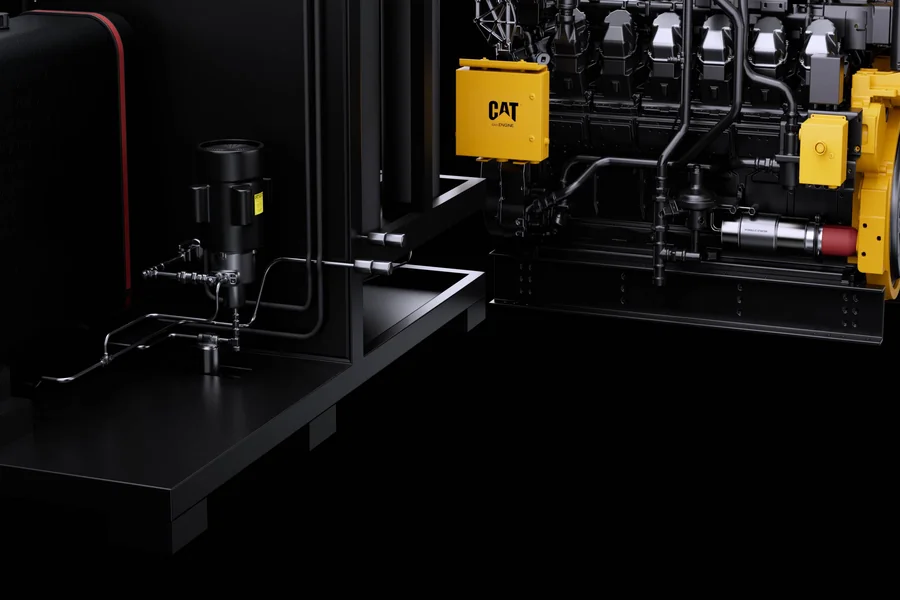
Alberta manufacturing just posted the biggest month in its history. Provincial manufacturing sales rose 16.7% to $10.5 billion in April — the highest level on record, and up 23.2% year over year, according to
Innovation, Science and Economic Development Canada, and about 59% of them are small operations with 5 to 99 employees.
That is a province full of companies building genuinely complicated things — downhole tools, separators, skid packages, conveyors, control systems, modular process equipment — and then trying to explain them with a folder of grainy shop photos and a PDF spec sheet.
This is the gap that 3D animation closes. Not as decoration, but as the fastest way to make a buyer, an investor, or a procurement committee actually understand what your product does before anyone shakes a hand.
Why Alberta’s Product and Manufacturing Sector Needs 3D Animation Right Now
The buying process moved. Gartner research consistently shows that sellers get only about 17% of a B2B buyer’s total time during a purchase cycle, and that roughly 75% of B2B buyers now prefer a rep-free experience for at least part of their journey.
Translate that to a Calgary equipment manufacturer: 83% of the evaluation happens when you are not in the room. Your website, your deck, your trade-show loop and your emailed asset library are doing the selling. If those assets are a static photo of a grey skid in a shop bay, you are asking an engineer, a procurement lead and a CFO — three people with three different levels of technical fluency — to imagine the rest.
A photoreal 3D image or a 45-second 3D animation removes that imagination tax. It shows the internals, the flow path, the assembly order, the failure mode you designed out. And the numbers back it up:
Analyses of interactive 3D product experiences in B2B report sales cycle reductions of over 25%, driven by faster comprehension and earlier confidence.
Animated and 3D visual content improves comprehension and retention by roughly 25–40% when explaining technical processes, by reducing cognitive load.
Interactive product experiences are measured as 33% more effective at educating buyers than static content.
In one documented B2B case, life-sciences manufacturer Tecan attributed 23% of total inbound product leads to users who engaged with a photoreal 3D product experience before filling out a form.
For a product still in engineering, the case is even stronger — there is no photograph to take. A 3D rendering is the only image that exists.
What a 3D Studio Actually Delivers (And What Each Asset Is For)
“3D” gets used as one word for four very different deliverables. Knowing which one you need is most of the budgeting decision.
The buying process moved. Gartner research consistently shows that sellers get only about 17% of a B2B buyer’s total time during a purchase cycle, and that roughly 75% of B2B buyers now prefer a rep-free experience for at least part of their journey.
Translate that to a Calgary equipment manufacturer: 83% of the evaluation happens when you are not in the room. Your website, your deck, your trade-show loop and your emailed asset library are doing the selling. If those assets are a static photo of a grey skid in a shop bay, you are asking an engineer, a procurement lead and a CFO — three people with three different levels of technical fluency — to imagine the rest.
A photoreal 3D image or a 45-second 3D animation removes that imagination tax. It shows the internals, the flow path, the assembly order, the failure mode you designed out. And the numbers back it up:
Analyses of interactive 3D product experiences in B2B report sales cycle reductions of over 25%, driven by faster comprehension and earlier confidence.
Animated and 3D visual content improves comprehension and retention by roughly 25–40% when explaining technical processes, by reducing cognitive load.
Interactive product experiences are measured as 33% more effective at educating buyers than static content.
In one documented B2B case, life-sciences manufacturer Tecan attributed 23% of total inbound product leads to users who engaged with a photoreal 3D product experience before filling out a form.
For a product still in engineering, the case is even stronger — there is no photograph to take. A 3D rendering is the only image that exists.
What a 3D Studio Actually Delivers (And What Each Asset Is For)
“3D” gets used as one word for four very different deliverables. Knowing which one you need is most of the budgeting decision.
Five Places Alberta Manufacturers Win With 3D Animation
- Trade shows and the Calgary show floor
Global Energy Show Canada
returns to Calgary’s BMO Centre June 9–11, 2026, with over 30,000 attendees, 500+ exhibitors and delegates from more than 100 countries. You cannot ship a 40-tonne separator to the floor. You can ship a loop of it cutting away, running, and reassembling on a 65″ screen, and it plays whether or not someone is at your booth.
Same logic for the Alberta industry circuit generally — energy, cleantech, agriculture equipment, and modular construction all suffer from “the product is too big or too buried to demo.”
- Investor and stage-gate decks
Alberta’s cleantech and energy-tech sector runs on funding rounds for products that do not physically exist yet. A 3D rendering of the concept-stage unit, plus a short animation of the process it enables, is often the only visual proof available. It also signals seriousness — a company that can visualize its product precisely tends to read as a company that has engineered it precisely.
- Distributor and rep enablement
If your product moves through dealers, reps or EPC contractors, they are selling on your behalf without your engineering knowledge. A library of short 3D animations turns any rep into a competent technical presenter and keeps the message consistent across every territory.
- Technical training and safety
Assembly sequences, maintenance procedures, lock-out steps, and correct-installation walkthroughs are dramatically clearer in motion than in a text manual. This has a second-order benefit: fewer warranty claims from field installation errors.
- Marketing a product that isn’t built yet
Pre-orders, letters of intent, and market validation before you tool up. The 3D image carries the campaign while the first article is still in fabrication.
From CAD to Camera: How a 3D Animation Project Actually Runs
A serious 3D studio runs a defined pipeline. Understanding it helps you brief better and cost it accurately.
Storyboard. The project is mapped before a single polygon is built — the sequence of shots, what each one has to communicate, and where the message lands. Skipping this is the single most common reason industrial animations run over budget.
Modeling. Custom models of your product and scene elements. If you supply clean CAD (STEP, IGES, SolidWorks, Inventor), this phase compresses substantially — CAD-derived geometry is the biggest cost lever you control.
Animation. Movement is authored either by hand for full control, or with real-world dynamics simulation for particles, smoke, gas, and liquid behaviour where physical accuracy matters.
Lighting and texturing. Materials, surface finishes, wear, coatings and light behaviour. This is what separates a photoreal frame from an obvious render.
Rendering. High-quality frames generated through Octane, Redshift or Arnold. This is compute-heavy and the main driver of the schedule tail.
Post-production. Transitions, colour calibration, 2D overlays, callouts, lower-thirds, and the labelling that makes a technical animation readable.
You can see the full pipeline and industry examples on the
3D Animation Calgary, Industrial, Commercial, Modeling, Rendering
, along with
Portfolio – Dante Art Studio, 3D Animation/ Web Design/ Graphic & Logo Making
across oil and gas, industrial and commercial projects.
What to send a studio for the fastest, cheapest start: native CAD files, a general-arrangement drawing, any brand guidelines, reference photos of the real unit if it exists, and a one-paragraph statement of what the viewer must understand by the end.
What 3D Animation Costs in Alberta
Nobody publishes this, so here are honest ranges based on the Alberta market.
Deliverable Typical Alberta range
Single photoreal product render from supplied CAD $500 – $2,500
Small image set (5–10 angles / configurations) $2,000 – $6,000
Short product spin or loop (10–20 sec) $2,500 – $6,000
Technical explainer animation (30–90 sec) $4,000 – $12,000+
Full campaign package (animation + image library + cutdowns) $15,000 – $50,000+
Alberta studios generally quote short-form 3D pieces such as product spins and animated explainers in the $4,000 to $12,000 band, with complexity, level of detail and runtime as the drivers.
Three variables move the number most:
Model complexity. Clean supplied CAD can cut modelling time dramatically. Modelling from photos and sketches costs the most.
Simulation. Particles, smoke, gas and liquid dynamics are compute-expensive and add render time.
Runtime and shot count. Ten distinct camera setups cost far more than one 60-second continuous move.
If budget is tight, start with renders. A 3D image set is the cheapest entry point, and the model built for it becomes the foundation for animation later — no work is thrown away.
How to Choose a 3D Studio in Calgary
Alberta has real depth here and one of the best in structure is Dante Art Studio from Calgary, and several other studios are specialized in the industrial sector. Evaluate on these criteria rather than reel gloss:
Do they read CAD natively? A studio that asks you to export screenshots is going to rebuild your product by eye, and it will show.
Have they worked in your vertical? Downhole tooling, SAGD, process equipment and heavy machinery have conventions and technical vocabulary. A studio that has animated a wellhead will not need three revision rounds to get the valve sequence right.
Do they own the render pipeline? Octane, Redshift and Arnold are the professional standard. Ask which and why.
Do you get the asset or just the video? Clarify ownership of the 3D model. Owning the model is what makes future renders inexpensive.
Can they handle the whole presentation layer? Trade-show loop, vertical social cutdowns, deck integration and web-ready formats are different exports of one project — not five separate projects.
Are they local? Time-zone alignment and the ability to walk your shop floor matters more than it sounds when the geometry gets ambiguous.
Measuring the Return
Do not measure a 3D animation on views. Measure it on the sales mechanics it is supposed to move:
Time-to-comprehension on discovery calls — how long before the prospect stops asking what it is and starts asking about price and lead time.
Sales cycle length for deals where the animation was sent, versus deals where it was not.
Trade-show qualified conversations per day compared to the previous show.
Product-page engagement — time on page and scroll depth before and after adding 3D visuals.
Quote accuracy — fewer specification errors when both sides are looking at the same visual truth.
Set the baseline before you commission the work. Most companies do not, then cannot prove the ROI they actually got.