Bunk Beds for British Children: Are They the Right Choice for Your Family?
The question of whether bunk beds are the right choice for a British family depends almost entirely on the specific household's…
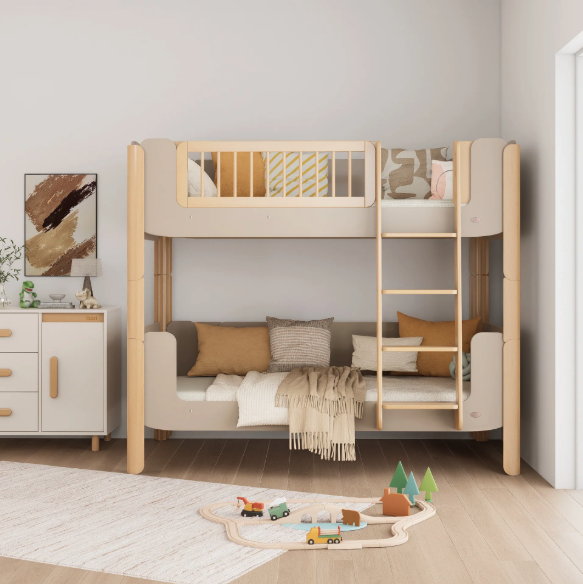
The question of whether bunk beds are the right choice for a British family depends almost entirely on the specific household's circumstances rather than any universal answer. For two British children sharing a bedroom — one of the most common arrangements in the UK's compact housing stock — a quality bunk bed is often the most practically sensible furniture investment available. For a single British child in a spacious bedroom with no floor space constraints, the same bunk bed provides limited value. This guide gives British families the honest, practical assessment needed to determine whether a bunk bed suits their specific situation.
Quick Answer
Are bunk beds a good choice for British children?
Bunk beds are an excellent choice for British families with two children sharing a bedroom, where the floor space efficiency of two full-size UK single sleep surfaces within one bed footprint provides meaningful benefit for the shared room's remaining functional space. They require careful safety assessment against BS EN 747, a minimum ceiling clearance of 90 cm above the top berth, and solid timber construction appropriate for the elevated configuration. For single-child British bedrooms without space constraints, the practical case for a bunk bed is weaker. For shared British bedrooms — the norm in millions of UK terraced houses, semis, and flats — the floor space liberation is the single most impactful children's furniture improvement available.
Benefits of Bunk Beds for British Families
What are the practical advantages of a bunk bed for UK families?
The primary benefit of a bunk bed in a British shared children's bedroom is floor space: two sleeping surfaces within the footprint of one standard UK single bed frees the equivalent of 1.7 square metres of British bedroom floor space compared to two separate single beds. In a typical British shared children's bedroom of 8 to 12 square metres — common across the terraced house and semi-detached stock that characterises British suburban housing — this freed space is enough for a study desk for each child, a storage unit, and a defined play zone. Secondary benefits include the strong appeal of the elevated sleeping position to most British primary school children, particularly the top berth, and the long-term cost efficiency of a single frame investment that serves two children simultaneously.
Drawbacks of Bunk Beds for British Families
What are the limitations of bunk beds for UK families?
The main limitations of bunk beds in British homes are: ceiling height requirements that can be a genuine constraint in older British properties with lower-than-standard ceilings, particularly Victorian terraces and loft conversions; the minimum age of six for the British top berth, meaning younger siblings must use the lower berth while waiting to be developmentally ready for the elevated position; the physical demand of making the top berth that many British families find impractical as a daily routine; and the greater financial investment compared to two budget single beds, though quality comparison across the full service years typically favours the solid timber bunk. British families in properties with non-standard ceiling heights should measure carefully before purchasing.
Space Efficiency in British Bedrooms
|
Bedroom Configuration |
Floor Used by Beds |
Remaining Floor in 10 sqm British Bedroom |
Practical Impact |
|
Two separate UK singles |
Approx 3.4 sqm |
6.6 sqm |
Tight for desk, storage, and play in British room |
|
One UK bunk (single/single) |
Approx 1.7 sqm |
8.3 sqm |
Generous for desk, storage, and active British floor use |
|
UK loft bed (one child) |
Approx 1.7 sqm |
8.3 sqm (single child) |
Desk below; large floor for one British child |
|
Two UK small double beds |
Approx 4.6 sqm |
5.4 sqm |
Very tight; limited study and storage in UK bedroom |
Siblings Sharing Rooms in Britain
How does a bunk bed transform the British shared children's bedroom?
A quality bunk bed transforms the British shared children's bedroom from a space-constrained compromise into one with genuine functional capacity for two children's sleep, study, and play needs. The vertical stacking of two sleeping surfaces provides each British child with their own defined sleep zone — the personalisation of their bedding, their individual storage, and the immediate space around their berth — within a shared room that retains adequate floor area for the other furniture and activities both British children need. For British siblings who share a room, a quality bunk bed is the foundational furniture investment that makes the shared room genuinely workable across the primary school years.
UK Bunk Bed Safety: What British Parents Must Know
What are the essential BS EN 747 safety facts for British bunk bed buyers?
The essential safety facts for UK bunk beds are: BS EN 747 is the mandatory British safety standard governing guard rails, mattress depth limits, ladder design, and structural load ratings; the minimum recommended age for the top berth is six years for most British children; the top berth mattress must be within the maximum depth specified for the specific frame's guard rail height; ceiling clearance of at least 90 cm above the top berth sleeping surface is required; and annual structural inspection of all joints, guard rails, and ladder attachments is the minimum maintenance standard for British bunk beds in active use.
Alternatives to Bunk Beds for Space-Constrained British Homes
What alternatives exist for British families who need space efficiency but cannot use a bunk?
British families who need the floor space efficiency of a bunk but face ceiling height, age, or configuration constraints have several alternatives. A trundle bed provides a pull-out second sleeping surface beneath the lower bed at a lower profile than a full bunk — particularly useful for British homes where the ceiling height calculation does not allow a full bunk. An L-shaped bunk positions the berths perpendicularly in a corner, suiting British bedrooms with awkward shapes or chimney breast protrusions. For a single British child, a loft bed or mid-sleeper with study or play space beneath provides comparable floor space efficiency without the second sleeping berth.
Decision Table: Is a Bunk Bed Right for Your British Family?
|
British Family Situation |
Bunk Bed a Good Choice? |
Reason |
|
Two children sharing; British bedroom under 12 sqm |
Yes — strong case |
Floor space efficiency is the defining benefit in compact UK rooms |
|
Two children sharing; British bedroom over 14 sqm |
Yes — still practical |
Even with space, bunk frees room for UK study and play zones |
|
One child; small British bedroom |
Consider loft or mid-sleeper |
Single elevated berth with desk below; same UK floor efficiency |
|
Two children; large age gap (under 3 + over 6) |
Yes with planning |
Lower berth for toddler; upper berth when older child ready at 6 |
|
British property ceiling under 230 cm |
Measure carefully before buying |
Confirm 90 cm top berth clearance in the specific UK room |
|
One child; large British bedroom |
Probably not the best choice |
Standard single or small double more appropriate in UK context |
Frequently Asked Questions
Do UK bunk beds have to separate into two individual beds?
Quality UK bunk beds from specialist British children's furniture brands are designed to separate into two independent single beds when the shared room arrangement ends or the British children's ages make the bunk configuration less suitable. Confirm that the specific UK bunk bed separates into two functioning independent beds before purchasing, and that all required components for the separated configuration are included with the original British purchase.
How do British parents keep the top bunk sheet in place?
Fitted sheets with deep pockets of at least 35 to 40 cm stay most reliably on UK bunk top berth mattresses, as the restricted access to all four corners of the elevated mattress makes standard-depth pockets prone to coming loose during British children's active sleep movement. Changing top berth sheets is most efficiently done with two people: one at the accessible end of the ladder and one reaching from the side of the elevated berth.
At what age do British children typically stop using bunk beds?
Most British children use bunk beds through the primary school years and into early secondary school, typically until approximately age 12 to 15 when the sharing arrangement changes, the British children move to separate rooms, or body dimensions make the standard single berth dimensions genuinely limiting. Quality UK bunk beds separate into two independent single beds at this point, continuing to serve each British child in their own room.
Can a UK bunk bed be used in a British loft conversion bedroom?
British loft conversion bedrooms frequently have sloped ceilings and non-standard heights that make bunk bed placement more complex than in standard British rooms. Always measure the ceiling height at the specific intended bunk position in a British loft conversion, not the average room height, as sloped sections can significantly reduce the available clearance above the top berth. In many British loft conversion bedrooms, a low-profile bunk or a mid-sleeper configuration provides better ceiling clearance than a standard bunk height.
Final Thoughts
Bunk beds are one of the most practically valuable furniture investments available to British families with two children in a shared bedroom, provided the specific British ceiling height is adequate, the frame complies with BS EN 747, and the construction quality is appropriate for the full primary school service period. British families can compare current UK bunk bed options at boori.co.uk/collections/kids-bunk-beds