Discover Seven Manufacturing Capabilities Available Through 3ERP
Manufacturing capabilities available through 3ERP include CNC machining, injection molding, and 3D printing, offering diverse solutions for prototypes and…
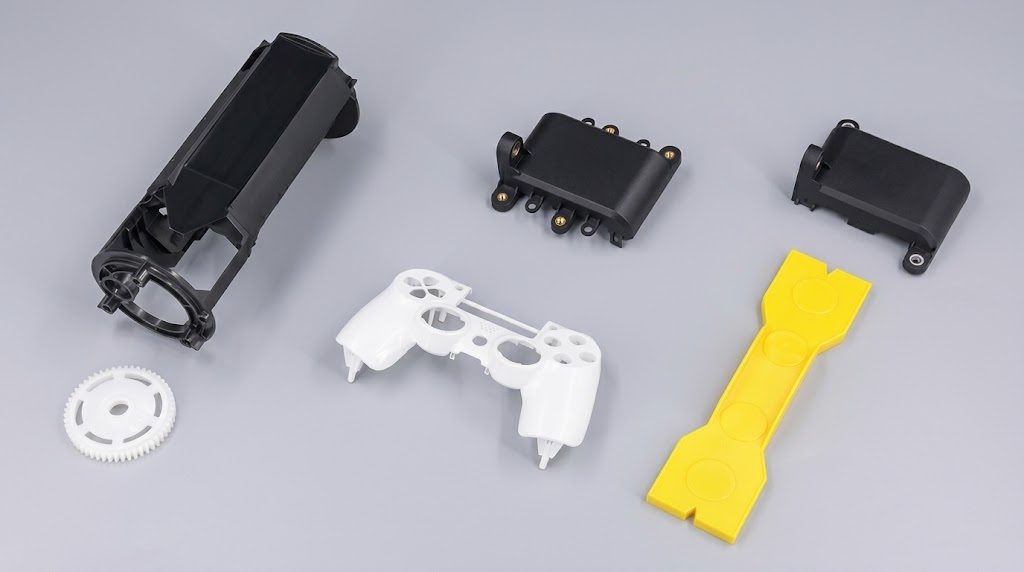
The manufacturing process to convert a digital design into a physical piece must meet the geometry, material, tolerances, and application of the design. Whether it's prototype or production components, the choice of method impacts accuracy, surface finish, price, and lead time. To satisfy these diverse needs, modern manufacturing includes subtractive, formative, and additive manufacturing technologies. If engineers know what is possible, they can make better decisions about the product design and create an effective process of going from concept to repeatable production.
-
CNC Machining: Achieving Precision Through Material Removal
Computer Numerical Control (CNC) is a widely used manufacturing process that uses computer-controlled cutting tools to shape a solid material. It is suitable for parts requiring dimensional accuracy, well-defined features, and functional mechanical properties. Milling can be used to make slots, pockets, contours, and intricate surfaces, and turning is used to make cylindrical parts like shafts, bushings, and threaded parts.
This ability allows for quick prototyping as well as low- and high-volume manufacturing. Aluminium, steel, or brass can be processed, and some engineering plastics can also be processed as per the component's requirements. Engineers need to consider tool access, wall thickness, inside corners, and tolerance requirements in their design. These factors can assist in reducing machining time while maintaining critical features.
-
Injection Molding: Producing Repeatable Plastic Components
Injection molding is a proven manufacturing solution for consistent plastic parts when the need for a design arises with larger quantities. It is the process of melting thermoplastic material, injecting it into the mold cavity, and cooling it before ejection. After the tooling is ready, the manufacturer can make a series of parts that all have the same geometry and surface properties.
It can be used for enclosures, connectors, consumer product parts, housings, and other molded parts. Material selection has an impact on strength, flexibility, heat resistance, and appearance. Mold design also affects production efficiency, such as cooling time, gate location, and part ejection. Prototype molding can be used to verify geometry before mass production, and mass production tooling can be used for larger quantities. To avoid defects, the designer should take into account potential shrinkage, draft angles, and even wall thickness.
-
Sheet Metal Fabrication: Forming Strong, Functional Parts
Sheet metal fabrication involves cutting, bending, punching, and stamping, as well as joining flat metal sheets to form functional parts. It is particularly suitable for brackets, equipment enclosures, panels, chassis, and structural assemblies where strength with minimal weight is desired.
Sheet metal fabrication is part of a larger manufacturing solution at 3ERP.com to bring custom components to life throughout their development phase. Laser cutting provides sharp profiles, and bending sets angles and 3D shapes. Punching creates holes and openings, while welding creates assemblies. Other methods of shaping metal to desired geometry include spinning and stamping.
-
Custom Extrusion: Creating Consistent Cross-Sectional Profiles
Custom Extrusion is a process of forming a continuous profile of material with a uniform cross-section by forcing it through a shaped die. Aluminum and plastic extrusion is helpful where a product needs to be extruded in multiple lengths with channels, grooves, ribs, or mounting features.
Aluminum profiles are frequently used in machine frames, structural supports, heat sinks, and equipment housings. Plastic profiles are used for seals, guides, trims, and protective channels. The geometry of the profile is determined by the die, which must be designed to allow for material flow, dimensional requirements, and production considerations.
Extrusion is especially useful when the cross section of a part is uniform throughout its length. The wall thickness, corner transitions, and behaviour of materials should be assessed by the designer before determining the profile. Extrusion tooling can assist in converting special design needs to repeatable manufactured parts.
-
Vacuum Casting: Developing Small Batches of Plastic Prototypes
Vacuum casting offers an economical way to make small quantities of plastic-like parts without having to invest in making injection moulds for production. In general, a master pattern is used to form a silicone mold, and then the polyurethane resin is poured in under a vacuum.
Draining helps to minimize bubbles and better capture fine surface detail. Parts can emulate a variety of rigidities, flexibilities, transparencies, or appearances according to the chosen resin. This makes vacuum casting helpful for appearance versions, product assessments, demo units, and small series of prototypes.
But silicone molds have a limited useful life, and polyurethane materials may not emulate all of the properties of production thermoplastics. It is therefore important for engineers to understand that different casting materials should be used for different testing purposes, and the parts will not necessarily perform the same as if they were injection-molded.
-
Rapid Tooling: Bridging Prototypes and Larger Production Runs
Rapid tooling is the middle ground between single prototypes and full production. Manufacturers can use softer steel or aluminum tooling to make limited production runs and test designs in more representative production environments rather than immediately making the leap to conventional high-volume tooling.
This is helpful when a product requires functional validation, market testing, or initial manufacturing evaluation prior to further investment. It can reduce the design-to-molded-parts cycle time and can be used to find issues that might not be discovered in a one-off prototype.
The material used for the tooling will vary according to the quantity required, the complexity of the part, the characteristics of the resin, and the dimensions of the part. Rapid Tooling is especially pertinent when production runs of 100 or more parts are expected, although the number of parts that can be produced depends on the type of project. Through careful evaluation, it is possible to determine if its initial tooling cost is an appropriate trade-off between development speed and unit economics.
-
3D Printing: Building Complex Geometries Layer by Layer
3D printing is not a subtractive process like machining; it is an additive process that produces parts by stacking or solidifying layers of material. The additive process enables the creation of complex shapes, internal channels, lattice structures, and other features that might otherwise be too hard or costly to create using traditional manufacturing techniques.
Options include plastic 3D printing and metal 3D printing, depending on the mechanical requirements, resolution, material availability, and intended use. Concept models, fit checks, and lightweight prototypes are frequently printed on plastic. Metal printing is capable of making complex functional parts for applications that need appropriate metallic properties.
Build orientation, support structures, surface characteristics depending on the layer, and post-processing requirements should be taken into account by the designer. While 3D printing has a lot of geometric freedom, it is not necessarily the least expensive or quickest method of producing every component. This will allow comparisons to be made between it and machining, molding, and other processes to determine the most feasible route of production.
Conclusion
The engineering problems solved by each manufacturing process vary, such as precision in CNC machining, structural versatility in sheet metal fabrication, repeatability in injection molding, and geometric freedom in 3D printing. Vacuum casting and rapid tooling can be used for intermediate development stages, and custom extrusions can be used to produce consistent profiles for special applications.
3ERP combines these attributes with more materials and finish options, and has been a rapid manufacturing company with global customers since 2010. It is ISO 9001:2015 certified and meets the needs of prototyping and production. The analysis of geometry, materials, quantities, tolerances, and lead times aids in the definition of a manufacturing strategy that optimizes technical performance against practical costs.