How to Improve Your GameZone Tongits Skills Against Aggressive and Defensive Players
Playing Tongits requires more than completing card combinations. Players must also recognize opponents’ behavior, observe their decisions, and adjust their strategy throughout the round. Some participants prefer aggressive moves to complete melds quickly, while others…

Playing Tongits requires more than completing card combinations. Players must also recognize opponents’ behavior, observe their decisions, and adjust their strategy throughout the round. Some participants prefer aggressive moves to complete melds quickly, while others take a defensive approach by reducing unmatched cards and avoiding unnecessary risks.
In GameZone Tongits, understanding these playing styles can help improve decision-making. Monitoring exposed melds, reviewing the discard pile, and managing deadwood can help players develop a more flexible approach.
Quick Answer: How Should You Adjust Your Tongits Strategy?
Against aggressive players, monitor exposed melds, protect useful combinations, and avoid discarding cards that could help complete their hands. Against defensive opponents, prioritize deadwood reduction, maintain flexible combinations, and avoid waiting too long for specific cards. Base your decisions on visible information rather than assumptions about hidden cards.
1. Understand Aggressive and Defensive Tongits Players
Aggressive players usually look for opportunities to complete combinations quickly. They may frequently pick up useful discards, expose completed melds, and take calculated risks when their cards offer promising combinations.
Defensive players are generally more cautious. They prioritize reducing unmatched card points, carefully select their pickups, and avoid unnecessary moves that could increase their exposure.
Common signs of aggressive players:
- Frequently picking up cards that complete or extend melds.
- Quickly exposing completed combinations.
- Taking opportunities to call a Fight when conditions are met.
- Prioritizing immediate combinations over alternatives.
Common signs of defensive players:
- Carefully choosing which cards to discard.
- Prioritizing deadwood reduction.
- Avoiding unnecessary pickups.
- Maintaining a cautious approach with incomplete combinations.
2. How to Adjust Against Aggressive Players
Aggressive opponents can put pressure on other participants by developing combinations quickly. Protect your hand while paying closer attention to exposed melds and discarded cards.
Monitor Exposed Melds
In GameZone Tongits Plus, previously discarded cards may become useful to opponents when they can form or extend a meld.
For example, if an opponent exposes 6♥, 7♥, and 8♥, discarding 9♥ could give that player an opportunity to extend the straight flush.
Review exposed combinations before releasing a card. However, do not automatically hold every connected card. Consider your own combinations and available alternatives.
Preserve Flexible Combinations
Suppose your hand contains 5♣, 6♣, 7♣, 8♦, 8♠, and 8♥. You have two possible combinations: a straight flush using the clubs and three-of-a-kind using the eights.
Keeping these possibilities can provide more options as new cards become available. Avoid breaking useful combinations without considering what you gain in return. At the same time, do not hold unfinished sequences indefinitely if doing so increases your deadwood.
Manage High-Value Cards
Kings, Queens, and Jacks carry 10 points each in Tongits Plus. Retaining several unmatched face cards can increase your remaining points if the round ends before you complete a combination. Regularly reassess whether keeping them is worth the risk.
3. How to Adjust Against Defensive Players
Defensive opponents may be harder to read because they avoid unnecessary pickups and focus on controlling their remaining card points. Maintain a flexible hand and avoid becoming too passive.
Track the Discard Pile
Suppose you are holding 7♦, 8♦, and 9♦ while waiting for another diamond to complete a straight flush. If several connecting cards have already appeared in the discard pile, reconsider whether continuing to pursue that combination is practical.
The remaining cards could still be in the stock or another player’s hand. However, tracking visible cards gives you more information when deciding whether to continue waiting or change direction.
Reduce Unmatched Cards
Consider holding A♠, 4♣, 7♦, J♠, and Q♥. These cards do not form a combination, while the Jack and Queen alone carry 20 points.
Instead of waiting indefinitely for a specific card, evaluate your options after every turn. Reducing unmatched high-value cards may be more practical than depending on an uncertain combination.
Remember that a cautious opponent may still have a strong hand. Their reluctance to pick up discards does not necessarily mean they lack useful combinations.
4. Aggressive vs. Defensive Players: Key Differences
| Strategic area | Aggressive opponents | Defensive opponents |
| Card selection | Avoid discards that extend exposed melds | Prioritize useful combinations |
| Observation | Monitor pickups and exposed melds | Track repeated discards |
| Hand management | Preserve alternatives | Reduce unmatched cards |
| Risk management | Prepare for quick round developments | Avoid holding high-value cards too long |
5. Understand GameZone Tongits Plus Mechanics
GameZone Tongits Plus uses a standard 52-card deck without jokers and accommodates three players. The dealer receives 13 cards, while the other two participants receive 12 cards each.
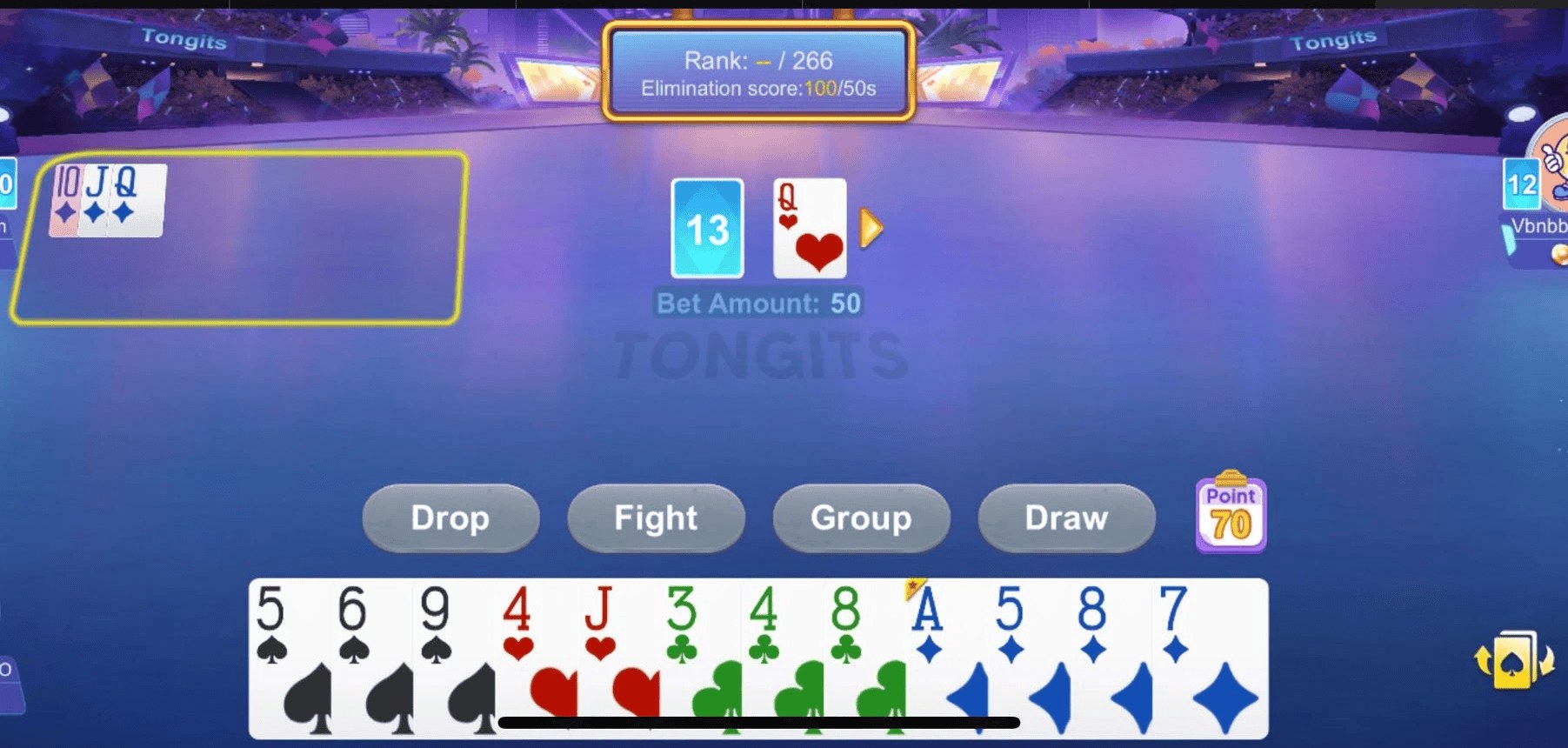
Important mechanics include:
- Three-of-a-kind: Three or more cards with the same rank.
- Straight flush: Three or more consecutive cards of the same suit.
- Tongits: A round-ending result governed by applicable game conditions.
- Fight: A round-ending challenge available when qualifying conditions are met.
- Card values: Aces count as one point, numbered cards retain their face values, and face cards carry 10 points each.
6. Avoid Common Tongits Strategy Mistakes
Even experienced players can make avoidable mistakes when responding to different opponents.
- Copying another player’s moves: Their cards and combinations may differ from yours.
- Keeping high-value cards too long: Unmatched face cards can increase deadwood.
- Assuming every discard reveals a hand: Visible cards provide clues, not complete information.
- Ignoring your own combinations: Observing opponents should not distract you from managing your hand.
- Changing strategy out of frustration: Losing a round is not a reason to make increasingly risky decisions.
7. Follow PAGCOR Responsible Gaming Guidelines
A better GameZone Tongits strategy should also include responsible gaming practices. The Philippine Amusement and Gaming Corporation (PAGCOR) promotes guidelines designed to minimize gambling-related harm and discourage underage participation.

PAGCOR identifies individuals below 21 years old and other restricted persons as ineligible for online gaming participation. Players must follow applicable eligibility and platform verification requirements. Those experiencing difficulties controlling their gaming activities can consult PAGCOR’s responsible gaming resources and official self-exclusion portal.
Frequently Asked Questions
Is aggressive or defensive playing better in Tongits?
Neither approach is always better. Aggressive play creates opportunities to complete combinations, while defensive play can help reduce unmatched card points. The right approach depends on your hand and the current round.
Why is deadwood management important?
Deadwood refers to unmatched cards outside completed combinations. Their point values can affect the result when a round ends.
Conclusion
Developing a better GameZone Tongits strategy requires understanding how different opponents approach each round. Aggressive players call for careful discard decisions and attention to exposed melds, while defensive opponents require patience, flexible combinations, and effective deadwood management.
Observe repeated actions, reassess your hand, and make decisions based on available cards and actual game mechanics. Although adaptability cannot guarantee a win, it can help reduce predictable mistakes and encourage more thoughtful gameplay. Responsible gaming and personal limits should always remain essential.