Lip Contouring vs. Volumization: How Practitioners Select Fillers for Subtle Definition
Patients rarely walk into a clinic asking for an increase in viscous resistance. They ask for a softer border. They ask why the lipstick they have worn for fifteen years now bleeds fine vertical red…
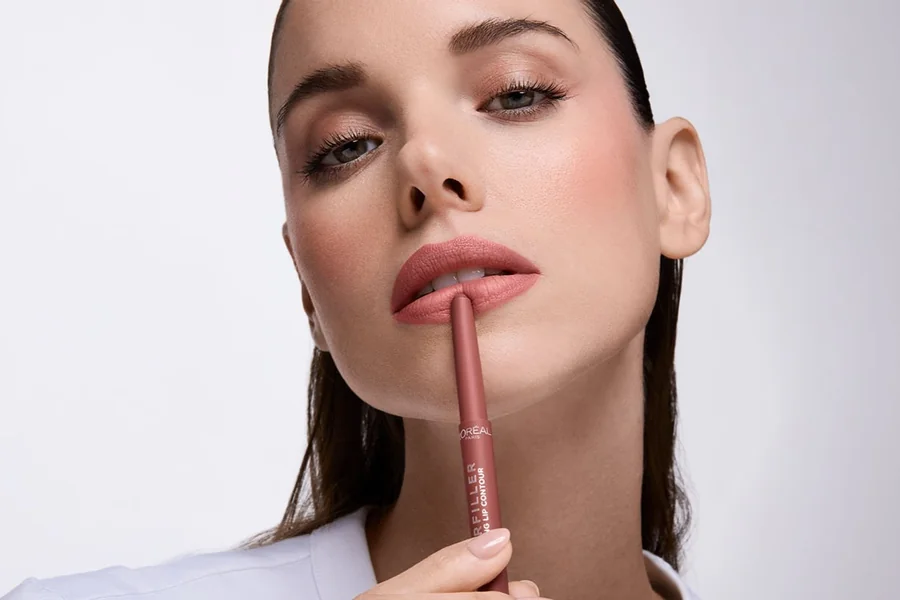
Patients rarely walk into a clinic asking for an increase in viscous resistance. They ask for a softer border. They ask why the lipstick they have worn for fifteen years now bleeds fine vertical red lines into the skin above their upper lip. Alternatively, they bring in photos of celebrities with dramatically enlarged vermilion borders and request a dramatic boost in overall projection. Translating those aesthetic requests into precise anatomical targets requires an understanding of how hyaluronic acid gels behave once injected into dynamic tissue. The distinction between defining an edge and inflating a volume is not merely a matter of injection volume. It is a fundamental divergence in rheology, tissue depth, and structural mechanics.
Selecting the wrong product for a specific anatomical goal leads directly to unnatural outcomes. Tyndall effect, product migration, and unnatural stiffness during facial expressions represent frequent technical missteps in lower-face rejuvenation.
The Micro-Anatomy of Definition Versus Fill
Achieving anatomical precision in lip augmentation requires targeting distinct structural layers. Lip contouring focuses on the vermilion border, the orbicularis oris insertion point, and the Glogau-Lilliput line. Here, the goal is structural crispness. Injectors place microscopic threads or linear ribbons of gel precisely at the dermal-vermilion junction to reinforce the white roll. This creates a crisp physical barrier that prevents perilial rhytides from drawing color outward from the wet-dry margin.
Volumization operates in an entirely different anatomical plane. Injectors target the deep submucosal tissue or the intra-orbicularis plane to expand the body of the lip, known as the dry mucosa.
[ VERMILION BORDER / WHITE ROLL ]
│ ◄── High G’ (G-Prime), Low Cohesivity Gel
▼ (Target: Dermal-Vermilion Junction)
┌───────────────────────────────┐
│ Epidermis / Dermis Layer │
├───────────────────────────────┤
│ Submucosal Plane │ ◄── Medium G’, High Cohesivity Gel
│ (Dry Vermilion Body) │ (Target: Volume Restoration)
├───────────────────────────────┤
│ Orbicularis Oris Muscle │
└───────────────────────────────┘
The tissue here is subject to constant kinetic forces from talking, chewing, and expression. Placing a rigid, high-lift gel in the submucosa often yields a firm, unnatural mass that moves out of sync with the underlying muscle.
The anatomical boundary between these two targets is subtle, but breaching it alters the mechanics of the lower face. When gels intended for border definition bleed into the superficial submucosa, the lip loses its crisp definition and takes on a puffy, flattened appearance. Conversely, soft volumizing gels placed along the vermilion border lack the mechanical strength required to hold a sharp edge under muscular tension.
Rheological Variables: G’ Prime, Cohesivity, and Viscosity
Evaluating hyaluronic acid (HA) dermal fillers requires looking beyond simple concentration metrics expressed in milligrams per milliliter. Physical characteristics dictate clinical behavior. Elastic modulus, denoted in physics as G’ (G-prime), measures a gel’s resistance to deformation when mechanical force is applied. A high G’ gel acts like a firm spring, providing vertical lift and structural resistance against surrounding soft tissue. Low G’ gels yield easily under pressure, spreading smoothly into micro-spaces within tissue compartments.
Cohesivity represents the intermolecular forces binding the cross-linked HA network together. High cohesivity keeps a gel intact as a single mass, while low cohesivity allows individual gel particles to migrate or integrate more fluidly into surrounding tissue.
+——————-+——————–+———————–+————————+
| Clinical Target | Ideal Rheology | Injection Plane | Primary Risk Profile |
+——————-+——————–+———————–+————————+
| Vermilion Border | High G’, Low to | Superficial Dermal- | Surface irregularity, |
| (Definition) | Moderate Cohesivity| Vermilion Junction | Tyndall effect |
+——————-+——————–+———————–+————————+
| Lip Body | Moderate G’, High | Submucosal or Intra- | Nodules, unnatural |
| (Volumization) | Cohesivity | muscular | dynamic movement |
+——————-+——————–+———————–+————————+
| Philtral Columns | High G’, High | Subcutaneous / | Asymmetry, arterial |
| (Structure) | Lift Capacity | Supraperiosteal | compression |
+——————-+——————–+———————–+————————+
For sharp lip contouring, practitioners generally select a filler with a higher G’ and controlled spread. The gel must stand its ground against the contractility of the orbicularis oris without flattening into the body of the lip.
Volumization demands a different physical balance.
When building body in the dry mucosa, high cohesivity paired with a moderate G’ ensures the gel stays integrated as a single, flexible cushion rather than breaking into discrete, palpable nodules. American Society for Dermatologic Surgery (ASDS) clinical education materials regularly emphasize matching gel rheology directly to the mechanical stresses of the targeted anatomical zone.
If a gel lacks sufficient cross-linking density, enzymatic breakdown by native hyaluronidase strips away the volume within weeks. If it is over-cross-linked, the body may launch a foreign-body response, forming delayed-onset granulomas months after the treatment.
For clinical practices stocking an array of soft-tissue fillers, source reliability and batch consistency are essential for predictable rheological performance. Clinicians looking to maintain a balanced inventory of cross-linked hyaluronic acid gels tailored for different injection depths can buy Stylage for aesthetic practice use through authorized medical distribution channels to review specific formulation characteristics like the inclusion of mannitol for antioxidant stabilization. Having precise options on hand allows the practitioner to switch seamlessly between a high-definition contouring product and a softer volumizing gel within the same treatment session.
Different manufacturing processes—such as monophasic versus biphasic cross-linking technologies—further alter how these products respond to extrusion force through fine-gauge needles. Monophasic gels tend to degrade uniformly, whereas biphasic gels consist of cross-linked micro-particles suspended in a non-cross-linked HA fluid carrier. Understanding these subtle distinctions prevents common post-procedure surprises, such as late-stage gel swelling or unexpected tissue movement.
Common Product Selection Pitfalls
A frequent clinical mistake in lower-face rejuvenation is using a high-viscosity volumizing gel to crisp up an aging, fine vermilion border.
Over-filling the border with dense gel lifts the skin above the lip, creating an unsightly “duck-bill” protrusion or an artificial white shadow above the mouth.
- Border Over-Saturation: Placing too much volume in the vermilion junction flattens the Cupid’s bow, turning a natural parabolic curve into a straight, sausage-like roll.
- Deep Placement Failure: Depositing soft, low-G’ definition fillers deep into the submucosa results in rapid degradation without delivering noticeable volume.
- Ignoring Dynamic Movement: Selecting a stiff, rigid gel for central lip augmentation yields an unnatural appearance whenever the patient smiles or speaks.
- Intravascular Injection: Injecting dense products rapidly increases local tissue pressure, raising the risk of accidental vascular occlusion in the superior or inferior labial arteries.
The American Society of Plastic Surgeons (ASPS) highlights in its safety guidelines that precise anatomical mapping, paired with conservative product selection, drastically reduces the need for emergency reversal using hyaluronidase.
Matching Patient Anatomy to Product Rheology
Not every lip requires both contouring and volumization. A twenty-year-old patient seeking subtle enhancement often presents with intact border definition but desires modest projection in the central cushions. In this scenario, adding border definition is unnecessary and can distort naturally crisp lines. The primary goal here is gentle volume restoration using a cohesive, moderate-G’ gel.
Contrast this with an older patient presenting with structural deflation, radial perioral rhytides, and an inverted vermilion border. Applying volume directly into the body of an inverted lip simply pushes the tissue downward, worsening the deflation appearance. The structural outline must be re-established first.
STEP 1: Structural Assessment
│
├── Inverted border / Fine lines present?
│ └── YES: Prioritize Vermilion Definition (High G’)
│
└── Deflated body / Intact borders?
└── YES: Prioritize Submucosal Volume (High Cohesivity)
STEP 2: Micro-Cannula vs. Needle Strategy
│
├── Border Crispness Needed -> 30G/32G Needle (Precise, focal placement)
│
└── Diffuse Cushioning Needed -> 25G/27G Cannula (Micro-tunneling, reduced bruising)
Micro-cannula techniques have reshaped how practitioners approach deep volumization. A blunt 25-gauge or 27-gauge cannula glides through the submucosal plane, dispersing filler evenly while reducing trauma to the labial arteries.
However, sharp needles remain superior for border definition. Precise 30-gauge or 32-gauge needle insertions allow the clinician to lay down precise micro-droplets directly along the dermal-vermilion junction.
Complications, Limitations, and Tissue Interactions
The lip is one of the most vascular and highly innervated regions of the face. Vascular occlusion remains the most serious acute complication associated with hyaluronic acid injections.
The superior and inferior labial arteries typically run within the submucosal layer, behind the orbicularis oris muscle. However, anatomical variations are common. Studies published in dermatologic surgery literature show that these vessels can run superficially or intra-muscularly in up to 20% of patients.
[ Superficial Skin / Mucosa ]
│
├── (Safe Zone: Micro-droplets at Vermilion Junction)
│
[ Orbicularis Oris Muscle ]
│
├── ⚠️ (Variable Vessel Zone: Labial Arteries run here in ~20% of cases)
│
[ Deep Submucosa ]
Ischemia. The presence of pain that is disproportional to the procedure and is accompanied by immediate cutaneous blanching necessitates immediate intervention. Any time dermal fillers are placed, practitioners should have high-concentration hyaluronidase, warm compresses and oral vasodilation plans in hand.
The clinical challenges of delayed-onset complications are different. The later-formed nodules may arise due to the low grade bacterial biofilm formation or delayed reactions to certain cross-linking reagents (hypersensitivity).
Consensus positions published by the Aesthetic Hetero-Complications Group reveal that the non-vascular nodules need to be separated into the non-inflammatory gel accumulation and the inflammatory granulomas to manage. Noninflammatory lumps tend to disappear with light massaging or with small injections of hyaluronidase. The combination of intralesional steroids, hyaluronidase, and broad-spectrum oral antibiotics are needed to treat inflammatory granulomas.
Dermal fillers are soft-tissue fillers that are unable to mitigate extreme structural skin laxity and heavy perioral tissue droop. The anticipation of a gel to raise deep cutaneous folds will tend to over-fill, thus creating disproportions on the face. Hyaluronic acid treatments are also effective in combination with non-ablative rejuvenation using fractional laser, chemical peels or lip lifts in patients with severe cases of solar elastosis or deep static rhytides about the mouth.
It takes a rigorous method to lower-face aesthetic medicine to find a balance between patient expectations and the anatomy. The amount of gel to inject into a tissue plane is not a measure of success. It is characterized by the selection of the appropriate product rheology, positioning it in the appropriate depth, and the natural mechanics of the human face.