What Is the Secret Behind Modern Celebrity Eyewear Trends?
Secret Behind: Celebrities wear designer sunglasses to control their visual narrative and commodify their privacy. Eyewear acts as a highly visible…

Celebrities wear designer sunglasses to control their visual narrative and commodify their privacy. Eyewear acts as a highly visible, high-margin brand billboard that instantly communicates wealth and exclusivity while simultaneously hiding the wearer from direct scrutiny. This is the core engine of the accessory market. You do not buy luxury frames simply to block ultraviolet light. You buy them to project an impenetrable image to the public.
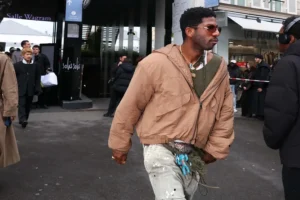
The paparazzi economy thrives on the candid shot. The airport arrival. The morning coffee run. In these environments, eyewear becomes a physical barrier between the talent and the lens. Public relations agencies understand this mechanism perfectly. A strategically placed pair of designer frames transforms a vulnerable, unscripted moment into a highly curated editorial advertisement.
We manipulate perception through accessories. The consumer sees a glamorous lifestyle. The marketing operator sees a calculated brand activation designed to drive retail sales.
How Did Designer Eyewear Become the Ultimate Status Symbol?
Decades ago, spectacles were purely functional medical devices. They corrected vision. They were not objects of desire. Today, they serve as the ultimate entry point into heritage luxury ecosystems.
A $4,000 leather handbag immediately alienates a massive portion of the middle class. It is too expensive for casual consumption. A $400 pair of sunglasses, however, extracts cash from that exact aspirational demographic perfectly. The consumer gets to wear the same logo as an A-list actress, and the fashion house acquires a customer with high lifetime value potential. It is an introductory drug for luxury consumption.
The manufacturing velocity of these goods has accelerated violently to meet manufactured demand. Traditional seasonal calendars are dead. Supply chains have been entirely re-engineered to feed consumer addiction to novelty. We see this in the data. The time-to-market for some luxury goods has shrunk to between four and eight weeks, forcing retailers to constantly rotate floor inventory. If you do not offer a new silhouette every month, the consumer forgets you exist.
This relentless churn mirrors the broader shift in how public figures manipulate their image. Red carpet appearances are no longer just about looking elegant. They are weapons of mass distraction. Consider the sheer analytical precision behind recent cultural phenomena. We documented the impact of the Sydney Sweeney see-through dress in real-time. That look was not a happy accident or a sudden burst of creative genius. It was a mathematically calculated maneuver designed to dominate social media algorithms for a 48-hour cycle.
Eyewear follows this exact same algorithmic playbook. Micro-frames generate outrage and engagement. Oversized shields generate an aura of untouchable wealth. The shapes change, but the psychological manipulation remains entirely constant.
What Makes the Modern Accessories Market So Disproportionately Profitable?
You might think to yourself that “creating high-end fashion requires massive investments in rare materials and specialized artisan labor to which I could never get my hands on”. You would be wrong.
What is the actual cost of production?
The raw materials for a standard pair of acetate sunglasses cost a fraction of the retail price. Injection-molded plastics, standard metal alloys, and stamped logos are cheap. You are not paying for the material. You are paying for the brand equity stamped on the temple piece.
Who actually controls the market?
The illusion of choice is the greatest trick the retail sector ever pulled. You walk into a boutique and see forty different brands. In reality, a tiny handful of massive optical conglomerates manufacture, distribute, and license almost every major name on those shelves.
The numbers dictate the strategy. The industry is currently riding a massive wave of post-pandemic spending. Driven by direct-to-consumer pipelines and algorithmic targeting, the global eyewear market revenue reached $146.20 billion in 2024. That money comes directly from a consumer base terrified of falling behind the current aesthetic standard.
We exploit this fear aggressively. When macroeconomic conditions deteriorate, you might expect luxury sales to collapse. They do not. The luxury machine is largely immune to logic. Even during severe global downturns, the luxury sector outperformed with a 36 percent rise in economic profit. People will delay necessary medical procedures before they stop buying status markers. The psychological need to project success overrides basic financial preservation.
Retail therapy is a gross misnomer. It is retail self-medication. Consumers purchase designer optics to mask their internal insecurities. Brands know this intimately. We package artificial confidence in hard leather cases and charge a four-hundred percent markup.
The licensing model guarantees zero risk for the heritage fashion houses. They do not make the glasses. They just rent their name to the optical manufacturer for a massive royalty fee. It is pure profit extracted from thin air.
How to Style Luxury Sunglasses Like an A-Lister?
The styling formula is embarrassingly simple. Proportion and contrast dictate everything. If you understand the geometry of perception, you can fake an unlimited wardrobe budget.
The Oversized Anchor: Massive frames require structured clothing. You pair large acetate with sharp shoulders.
The Micro-Frame Menace: Tiny, retro frames communicate irony. They only work with oversized, flowing garments to create visual tension.
The Monochromatic Cheat Code: Wearing a single color from head to toe forces the eye directly to the accessories.
When aiming for effortless chic, you rely on established codes. A classic silhouette always wins the long game. Case in point: placing a pair of Celine sunglasses alongside a structured camel trench coat instantly signals French-girl apathy. It tells the world you did not try, even if you spent three agonizing hours curating the outfit in front of a mirror. True luxury is looking like you just woke up wealthy.
Color psychology also plays a massive role in stylist strategy. Relate it back to major media moments. The internet fractured during the Sabrina Carpenter yellow dress moment. Yellow implies loud, unapologetic confidence. It demands attention.
The exact same rule applies to eyewear frames. Tortoiseshell screams old-money generational wealth. Stark white frames scream aggressive modernity. Black frames are the default armor of the insecure.
Trend forecasters monitor these micro-shifts obsessively. Look at any curated winter fashion trends and styling guides. Heavy and thick framing, heavily tinted lenses are replacing the ‘flimsy’, minimalist wire rims of the previous decade. The cultural mood is currently defensive. Consumers want heavier barriers between themselves and the outside world.
Celebrity stylists do not pick clothes based on what is pretty. Stylists act as brokers. They negotiate brand placements and carefully calibrate the exact level of visual hostility an accessory provides.
Why Are Consumers Still Willingly Paying Premium Prices?
Status anxiety is a highly communicable disease.
The democratization of fashion destroyed traditional class boundaries. Fast fashion giants can steal a runway design and have a cheap polyester replica sitting in a mall within twelve days. The aesthetic itself is no longer exclusive. Because anyone can buy the silhouette, the only way to signal a true, elevated position in the social hierarchy is the microscopic, gold-foil engraving on the side of the frame.
Consumers are not buying protection from the sun. They are buying distance from the middle class.
Look back closely at the fashion trends of 2023. The media pushed a massive narrative around "quiet luxury." Neutral tones. Unbranded cashmere. Anonymous leather goods. But quiet luxury was always a complete lie. It was just loud luxury whispering. The consumers who bought into the trend still demanded the logo. They just wanted the logo to be slightly harder for poor people to recognize.
Pricing strategy is psychological warfare. If we price a pair of glasses at $150, the consumer assumes it is mass-market garbage. If we take that exact same pair of glasses, put it in a heavier box, and price it at $650, the consumer assumes it is a handcrafted masterpiece. The price tag itself is the feature.
Exclusivity must sting slightly to feel real. The financial pain of the purchase validates the worth of the item in the consumer's mind. They want to be punished at the register. It proves they belong to a club others cannot afford to join.
We construct entire digital ecosystems to reinforce this delusion. Influencer seeding. Controlled scarcity. Artificial waitlists for mass-produced plastic. The margin on luxury opticals remains among the absolute highest in the entire global retail sector.