How Wisconsin’s Seasonal Cycles Shape Heavy Equipment Maintenance and Repair
Every wheel loader in Wisconsin lives two lives. There’s the summer machine that pushes gravel into a fresh driveway at 85 degrees, and the January machine that does it at 5 degrees with a wind…
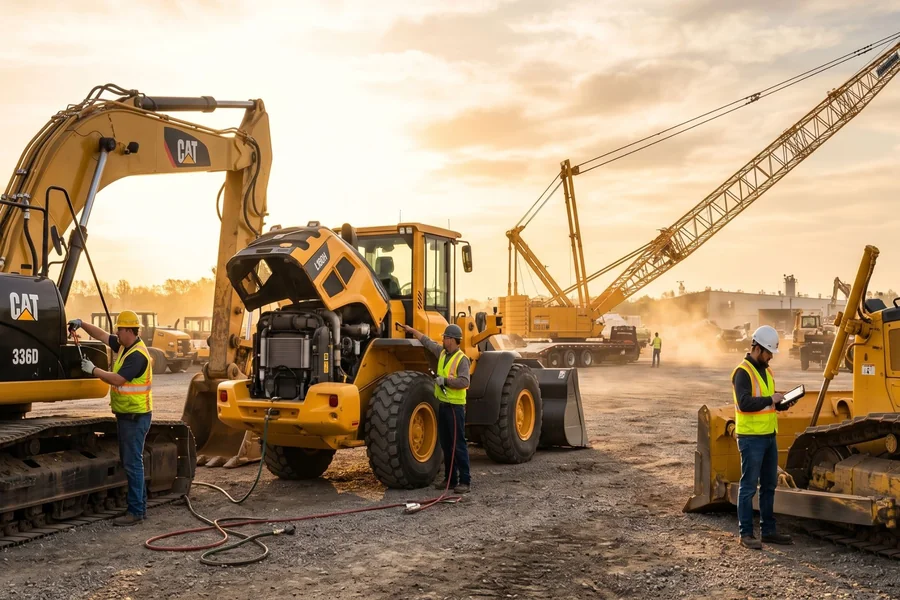
Every wheel loader in Wisconsin lives two lives. There’s the summer machine that pushes gravel into a fresh driveway at 85 degrees, and the January machine that does it at 5 degrees with a wind chill straight off Lake Michigan. Same iron, wildly different conditions.
A contractor I talked to near Eau Claire tracked his repair bills for three winters and found the same pattern each time: small problems waited until April, then turned into expensive ones. That’s the deal with this state. You don’t just maintain equipment here. You maintain it on a schedule the seasons set for you.
So here’s what this piece covers: how cold, salt, mud, and heat each attack your machines on a predictable clock, and what you can do about it before the repair shop calls with a number that makes you sit down.
Why Wisconsin Punishes Equipment Harder Than Most States
Think about what your machine actually goes through in a twelve month stretch. Freezing nights that shrink seals. Forty degree swings between morning and afternoon that stress every metal joint on the machine. Road salt and brine tracked onto jobsites. And then summer, when the same engine that struggled to warm up in February can’t cool down fast enough.
The National Weather Service has documented for years that the Upper Midwest swings between genuine Arctic air in winter and humid tropical air in summer, often within the same calendar year. That range is what does the damage. Materials expand and contract, moisture works into places it shouldn’t, and every component that depends on grease or oil gets tested twice a year instead of once.
What that means for you, practically: your maintenance calendar can’t be generic. A preventive maintenance schedule built for a Texas fleet will quietly fail you here by February. I’d argue the schedule matters more than the brand of machine. A well-kept 12-year-old excavator beats a neglected new one every single time.
The Four Wisconsin Seasons, and What Each One Does to Your Iron
Winter: The Freeze Cycle
Cold is the obvious enemy, but freezing is the sneakier one. Water sitting in a hydraulic line, a fuel filter, or the bottom of an air tank doesn’t stay water. It expands, and where it expands, something eventually cracks.
Three things earn their keep in a Wisconsin winter:
- Fuel treatment and water separators checked on a real schedule, not when the machine sputters
- Battery load testing before the first hard freeze, because batteries that pass in October fail in January
- Block heaters and proper warm-up time, since cold starts wear an engine faster than any hard working day
Diesel gelling is the other classic. If your machine sat outside overnight and won’t start at 6 a.m., that’s not bad luck. That’s a maintenance gap you could have closed in November.
Spring: The Thaw Reveals Everything
Spring is when the bill comes due. Frost heaves loosen undercarriage bolts. Mud season puts abrasive grit into every pivot point on a track machine, and frozen ground turns into ground that swallows a compact track loader whole. Undercarriage wear in Wisconsin often shows up in spring not because spring caused it, but because winter hid it under frozen ground.
Summer: Heat and Dust
Heat is quieter about it, but it’s still working on you. Cooling systems that were fine in May get pushed hard in July. Hydraulic fluid breaks down faster in sustained high temperatures. Dust from grading and demolition jobs clogs air filters and pulls abrasive particles into cylinders.
If you run machines on asphalt or concrete work in July, your cooling system is doing overtime. Check it weekly instead of monthly. That’s a judgment call, not a rule from a manual. Manuals don’t know what your August looks like.
Fall: The Window You Keep Missing
Fall is the honest season. Ground’s still workable, temperatures are kind, and everything that’s worn out is visible. It’s also the season most operators waste, because the rush of finishing projects before frost means service gets pushed to “after the season.”
That delay is exactly why January is expensive. A worn hydraulic hose that costs a couple hundred dollars to swap in October becomes a machine that’s down for a week in February, when you can’t get parts fast and your crew is standing around.
A Seasonal Maintenance Schedule You Can Actually Follow
Here’s a simplified version of a four-season checklist that works for a mixed fleet. Adjust for machine type and hours, but keep the timing.
| Season | Priority Task | Why Now
|
|---|---|---|
| Fall | Full inspection, hose and seal replacement, fluid analysis | Catch wear before freeze locks it in |
| Winter | Fuel treatment, battery testing, warm-up protocol | Prevent cold start damage and gelling |
| Spring | Undercarriage check, fastener torque, grease flush | Thaw exposes hidden wear |
| Summer | Cooling system service, filter changes, fluid checks | Heat and dust accelerate everything |
Print it, tape it inside your service truck, and check it honestly. The Occupational Safety and Health Administration is blunt about the stakes here: machine failures on a jobsite aren’t just a repair bill, they’re a hazard to the people working around that equipment. A hydraulic line that fails under load doesn’t care who’s standing nearby.
Field Repairs vs. Shop Work: How to Decide
Not every problem needs a trip to a service bay. Some do, and misjudging that costs you a week.
Field repair makes sense for: a burst hose, a dead battery, a flat, a fuel delivery issue, a sensor fault you can diagnose on site. Fast turnaround, no hauling cost, keeps the machine on the job.
Shop work makes sense for: hydraulic pump failure, engine or transmission work, undercarriage rebuilds, electrical gremlins that show up only under load. These need lifts, diagnostic tools, and clean space you don’t have in a gravel yard in December.
The gap between those two lists is where most owners lose money. A small field fix that gets ignored in October becomes a major shop job in February, and a shop that runs full service trucks alongside a real service bay is usually the difference between a two day fix and a two week one. Companies that handle Heavy equipment maintenance and repair in Wisconsin tend to structure their work around exactly this split, because they’ve watched it play out for years.
Five Habits That Cut Repair Costs Over Time
None of these are glamorous. All of them work, and I’d pick any one of them over a new machine.
Keep a written service log per machine, not a mental one. You’ll forget what you greased in June by the time October rolls around. Track hours, not dates, for oil and filter intervals, because a machine that runs 40 hours a week ages differently than one that runs 10. Wash salt and mud off before it hardens, especially around electrical connections and undercarriage. Store machines on hard, drained ground over winter if you can, since sitting in a spring thaw puddle is its own slow problem. And build a relationship with a service provider before you need one at 5 a.m. in a snowstorm.
According to the Environmental Protection Agency, improper handling of fluids like used oil and hydraulic fluid is a regulated issue, not a minor housekeeping detail, so a shop that handles disposal correctly is protecting you beyond the repair itself.
Here’s my honest take: most Wisconsin operators don’t have a repair problem. They have a timing problem. The equipment gives you warnings all year. Fall is when you should be listening, and it’s the season most people ignore.
So before the first hard freeze hits, walk your fleet and ask yourself one question: what’s going to fail in January if I don’t touch it now?