Sizing an Oversized Cut When You Are Between Two Letters
Medium through the shoulders, large through the chest. Sound familiar? Half the people I know land in that gap and just sort of guess, and with a slim shirt you can get away with guessing…
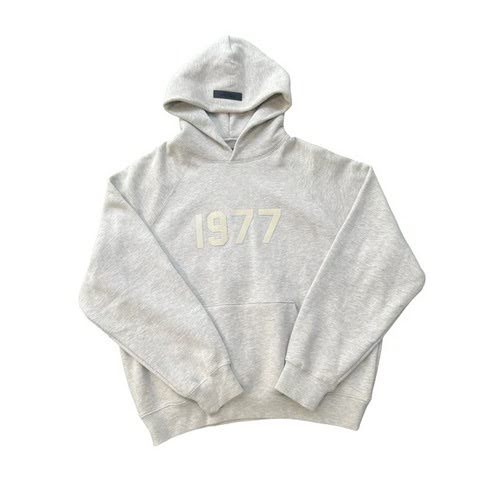
Medium through the shoulders, large through the chest. Sound familiar? Half the people I know land in that gap and just sort of guess, and with a slim shirt you can get away with guessing because the fabric meets you halfway. Relaxed fleece won’t. It has already piled on room before you touch the dropdown, so your two options sit further apart than they would anywhere else. Scroll the hoodies on Essentials Hoodie and most of them run S through XXL with that volume cut in from the pattern stage — which quietly changes what a letter is even telling you.
The seam that decides everything
On a normal fit, the shoulder seam lands on that bony point at the top of your arm, and everything underneath hangs off that one line. Put it in the wrong place and the whole thing looks like somebody else’s. A dropped shoulder breaks that rule on purpose — the seam slides a few centimetres down your upper arm, the sleeve head gets wider to cover the extra distance, and shoulder width more or less stops mattering.
Fine. So what’s left to size by? Body length mostly, plus however much slack you want around the ribs. Here’s the bit people miss though: going up a letter on a pattern like this isn’t just wider. It’s longer, the seam drops further still, the cuff ends up past your wrist bone. You can own a hoodie that fits lovely through the chest and still looks wrong in a photo, purely because the sleeves eat your hands every time your arms go slack.
Measure something you already wear
No chest-and-waist chart gets published for this catalogue, and between us I wouldn’t lean on one anyway. Two hoodies can print identical chest numbers and wear nothing alike once that seam moves. A hoodie you already like is a better ruler. Flat on the bed, smoothed out, tape across it cold, four numbers into your phone notes. Takes four minutes and you’ll use them for years.
| Measurement | How to take it | What it decides |
| Pit to pit | Straight across from one underarm seam to the other, garment flat | Chest room, before anything goes underneath it |
| Shoulder point to shoulder point | Along the top seam, end of one sleeve head to the other | Where the seam lands on your arm — the loose look lives or dies here |
| Collar seam to hem | Down the centre back, base of the collar to the bottom edge | Hem at your hip, or halfway to your knee |
| Shoulder seam to cuff edge | Along the outside of the sleeve | Cuff gripping your wrist, or bunched over your knuckles |
Then hold those four up against whatever you’re about to buy, not against the tee size you remember from last summer. A centimetre out, two centimetres out — nobody will ever notice. Five out in the length and you’re wearing a different garment, and that’s basically what people mean when they say a hoodie turned up enormous.
Fifty-fifty? I’d go smaller
My honest position, after staring at a lot of relaxed fleece: smaller letter, unless something specific is pushing you the other way. The extra room is baked in already. Pile more on and it stops looking loose on purpose and starts looking borrowed off a taller cousin, and it’s the sleeve that gives it away, every time, long before anyone clocks the body.
Three things flip that, mind you.
- A mid-weight layer underneath in January, which swallows more of the chest room than you’d expect.
- A long torso. If the hem keeps stopping above your hip bones, size up and stop fighting it.
- You wear sleeves pushed to the elbow, and that needs spare fabric to stack into.
Notice that not one of those is about your chest measurement. They’re about what the hoodie has to do once it’s actually on you, which is a different question and honestly the more useful one to settle before you add anything to a cart.
Your tee letter is lying to you
Jersey gives. A tee that’s a touch tight still sits alright across the shoulders, it just reads closer to the body, and your arms don’t really notice. Heavy fleece at 480 grams per square metre has nothing to lend you. A tight armhole on day one is a tight armhole in year three.
Which is why a large that’s been working for you across the Essentials T Shirt pages tells you about your chest and almost nothing about how a dropped-shoulder hoodie is going to hang off you. Two different decisions. Two sets of numbers that won’t match, and mine certainly don’t.
What a few weeks of wear actually changes
Some relaxing happens, sure, just not in the spots you were hoping for. Cuffs and hem ribbing go soft early on. The body? Barely moves, and that seam stays put where the pattern dropped it, which is the thing worth knowing. Snug under the arms in November, snug under the arms in March. So no, don’t buy on the hope that it’ll give.
Shrinking is the other direction, and that one’s on you. Hot water plus a hot dryer takes cotton fleece in mostly through the length (the width goes a bit too, less noticeably), and a couple of centimetres off the body is plenty to ruin proportions you chose on purpose. Cold wash, air dry, done — the hoodie you measured stays the hoodie you own.
None of this is really about your body, in the end. It’s about the shape you want to be standing in, which only you can answer. Do the measuring once, park the numbers in your phone where you’ll find them again, and the next between-sizes moment costs you ten seconds instead of a fortnight of dithering and a return you never get round to posting. Then go and have a proper look through the fleece and the tees with those numbers open.