The Ultimate Guide to Preserving Your Car Finish with Clear Bra Technology
A clear bra is a transparent, flexible film that is stuck over the painted surfaces of a car so that stones, road grit, salt and bug acids hit the film instead of the paint. The…
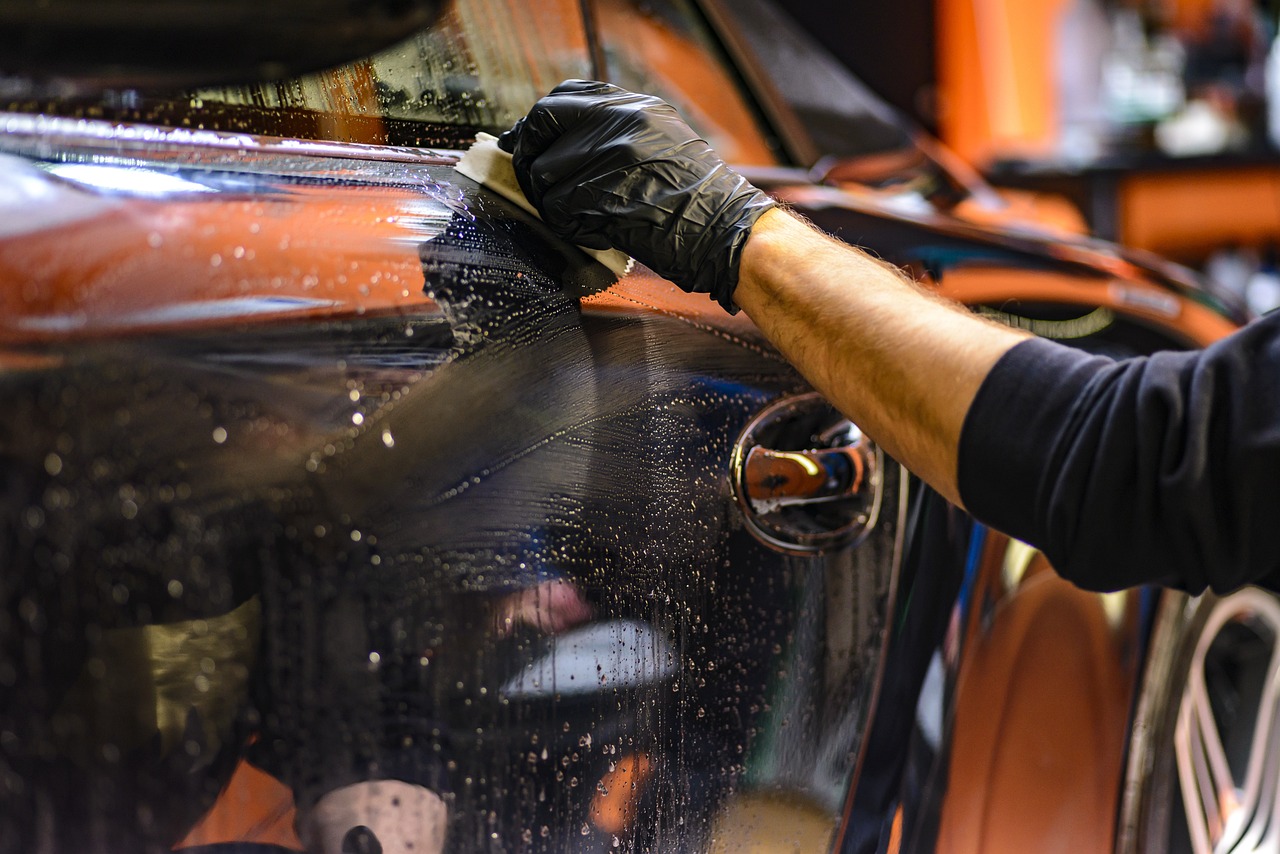
A clear bra is a transparent, flexible film that is stuck over the painted surfaces of a car so that stones, road grit, salt and bug acids hit the film instead of the paint. The trade name for the same product is paint protection film, which is usually shortened to PPF, and the two terms are used interchangeably by installers, dealers and insurers. If you are wondering why anyone would name a sheet of plastic after an undergarment, the explanation is fairly literal.
Before clear film existed, owners who wanted to protect the nose of a car bought a black vinyl cover (usually called a “car bra” or “front-end bra”) that strapped over the bumper and the front of the hood. When the clear version arrived, it did the same job without the snaps, the flapping and the look of a car wearing a hockey mask, so the industry kept the old name and added the word “clear.”
The film itself has a slightly more serious history. As a 2017 Wards Auto piece on the history of the clear bra explains, the material came out of the Vietnam era, when the military needed a way to protect helicopter rotor edges from flying debris, and the automotive version only became practical in the mid-1990s once digital pattern-making allowed film to be cut to fit specific vehicles. The same article quotes a dealer services operator pointing out that the old vinyl bras could actually damage paint through constant contact and vibration, which is a fair summary of why very few people still use them.
This guide covers what the film is made of, why cars in Ontario are harder on paint than the brochures suggest, how clear bra compares with the other common protection products, how much of the car is worth covering, what a careful installation involves, and how to look after the film through a Canadian year.
What A Clear Bra Is Made Of
A modern clear bra is a multi-layer film, and the layers matter more than the brand name on the box. According to the Wikipedia overview of paint protection film, the base material is a thermoplastic urethane, and newer films carry a self-healing top coat that is capable of reforming itself after it has been scuffed or scratched. In practical terms, a typical film has the following parts:
- Top coat: a thin clear layer that resists stains and, on most current films, flows back into shape when warmed by the sun or by warm water, so light swirl marks and fine scratches tend to disappear on their own.
- Urethane body: the thick, flexible middle layer that absorbs the energy of a stone strike, which is the layer that actually prevents a chip from reaching the paint.
- Adhesive: a pressure-sensitive adhesive that holds the film to the clear coat and that is designed to release cleanly when the film is heated and removed later.
- Release liner: the backing that is peeled off during installation and thrown away.
Film thickness is measured in mil (thousandths of an inch) in North America, and most automotive films sit somewhere in the range of 6 to 10 mil, with 8 mil being a common figure. Thicker is not automatically better, because a thicker film is harder to stretch around complex curves, and a film that is fighting the shape of a panel is more likely to lift at the edges. Finishes come in high gloss, matte (sometimes sold as “stealth”) and, increasingly, coloured film that changes the look of the car while still protecting the paint underneath.
What Clear Bra Does Not Do
It is worth being clear about the limits early, since a lot of disappointment with PPF comes from expectations that were never realistic. A clear bra will stop most gravel chips and road rash, light key marks and bug etching on the covered panels. It will not stop a large rock at highway speed from cracking a windshield, it will not hide chips that are already in the paint (the film sits over them and can make them look sharper), and it does nothing for panels that are not covered.
Why paint in Ontario wears out faster than you would expect
If you drive in the Greater Toronto Area, the paint on the front of the car spends roughly five months of the year being sandblasted. Municipal and provincial crews spread a mix of salt, sand and fine gravel to keep roads usable, and every truck in front of you on the 401 or the 400 throws some of it back at your bumper. Environment and Climate Change Canada states in its road salts frequently asked questions that approximately five million tonnes of road salts are used in Canada each year, and a good share of that ends up as brine on car bodies.
The damage happens in a fairly predictable order:
- A stone or a piece of winter gravel knocks a small chip out of the clear coat and the colour layer, usually on the leading edge of the hood, the bumper or the mirror caps.
- Salty slush gets into the chip, and the repeated freeze and thaw cycles of an Ontario winter (it is not unusual to swing above and below zero several times in a week) work the edges of the chip loose.
- If the chip reaches bare metal on a steel panel, surface rust can start, and once rust gets under the surrounding paint it spreads outward from the original chip.
Aluminium panels, which are now common on hoods and fenders, do not rust in the same way but can corrode and bubble under the paint. Either way, the fix after the fact is a respray, and a respray never quite matches factory paint.
This is the main reason PPF has a stronger case in Canada than in milder markets: the job of the film is to protect the paint system from the first chip that lets salt in, and keeping the gloss looking good is a secondary benefit.
Clear Bra Compared With Ceramic Coating, Wax And Vinyl Wrap
Most of the guides that rank for this topic compare PPF with ceramic coating, and a fair number add wax and vinyl wrap, so it is useful to put them side by side. The short version is that these products solve different problems, and only one of them is designed to stop chips.
| Product | What it is | Stops stone chips | Typical lifespan | Main reason to choose it |
|---|---|---|---|---|
| Clear bra (PPF) | Thick, clear urethane film applied to the paint | Yes, on covered panels | Many films are warrantied for 10 years or more | Physical impact protection |
| Ceramic coating | Thin liquid coating that cures into a hard, slick layer | No | Approximately 2 to 5 years depending on the product | Gloss, easier washing, chemical resistance |
| Wax or sealant | Soft layer of natural or synthetic wax | No | Weeks to a few months | Low cost, quick shine |
| Vinyl wrap | Thin coloured vinyl film | Very limited | Several years | Colour change or graphics |
The ceramic coating row deserves a little more explanation, because ceramic is often sold as if it were armour. Autotrader’s guide to ceramic coatings describes a coating as a semipermanent product that will not fade away like a wax after a few washes, puts professional-grade coatings at roughly three to five years, and notes that most ceramic coating warranties do not cover paint scratches or swirl marks. That is consistent with how the product works: a ceramic layer is measured in microns, while a clear bra is measured in mils, so the coating has nowhere near enough thickness to absorb a stone strike.
Vinyl wrap is the product most often confused with PPF, since both are films applied by hand. The difference is that vinyl is thinner, is usually coloured, does not self-heal, and is designed mainly to change how the car looks. It will take the edge off light abrasion, but a stone that would bounce off an 8 mil urethane film will usually go straight through a wrap.
In our view, the most sensible setup for a car that is driven through Ontario winters is clear bra on the impact zones and a ceramic coating over the film and the rest of the car, because the coating makes salt and grime easier to wash off and the film handles the chips. Wax is fine for a weekend car, though it will not last long on a car that sees a car wash every week in January.
How Much Of The Car Should Be Covered
Coverage is the single biggest decision with a clear bra, and it drives both the price and how well the car is protected. Installers in the GTA generally sell coverage in three tiers, with optional extras on top.
Partial Front
A partial front package usually covers the front bumper, the headlights, the mirror caps and the first portion of the hood and fenders (often around 45 to 60 centimetres back from the leading edge). This covers the area that takes the most direct hits. The weak point is the line where the film stops on the hood, which can be visible on dark colours and which collects a little dirt over time.
Full Front
Full front adds the entire hood and both full fenders, so there is no visible film line across the middle of the hood. Many packages also add the A-pillars, the leading edge of the roof and the door sills. For most daily drivers in Ontario, this is the tier that offers the best balance of cost and protection, and it is the option that many installers say is their most popular.
Full Body
Full body means every painted panel is covered, including doors, quarter panels, the roof, the trunk and the rear bumper. It makes the most sense for new cars that the owner intends to keep for a long time, for high-value or limited-production cars, and for matte paint, which is very hard to touch up and cannot be polished in the normal way.
Extras That Are Worth Considering
- Rocker panels and the lower doors, which take a lot of spray from the front tires in winter.
- The rear bumper top edge, where luggage and boots get dragged across the paint.
- Door cups behind the handles, where rings and fingernails cause fine scratches.
- Interior surfaces such as piano-black trim and infotainment screens, which scratch very easily and which some shops now cover with interior-grade film.
What A Careful Installation Looks Like
The quality of the installation decides most of what you will think of a clear bra in three years, more so than the brand of the film. Two cars wearing the same film can look completely different depending on how the paint was prepared and how the edges were finished. The steps below are what a careful shop does, and they are worth asking about before you book.
Paint Inspection And Preparation
The car should be walked around with you at drop-off so that existing chips, swirls and scratches are noted before any film goes on. The paint is then washed, chemically decontaminated to remove iron particles and tar, and clayed so that the surface is completely smooth. Any dirt left on the paint will be sealed under the film permanently. If the paint has swirl marks or light defects, those should be corrected first, because the film will preserve whatever it is applied over, good or bad.
Pre-Cut Patterns Versus Hand-Cut Film
There are two main ways to shape film to a car. Pre-cut kits are produced on a plotter from a digital pattern for each model, which is fast and avoids any blade touching the paint, although pre-cut kits often stop a few millimetres short of the panel edge.
Hand-cut or bulk installs use larger sheets that are trimmed on the car, which lets the installer wrap the film around the edge of a panel or tuck it into the panel gap, so the edge of the film is almost invisible and is far less likely to collect dirt or lift. A good installer will use whichever method suits the panel, and will be able to explain where the film edges will sit on your car.
Edges, Curing And The Follow-Up Check
The edges are where a clear bra fails, so they are where a careful installer spends the most time. Edges should be wrapped or tucked where the panel design allows it, relief cuts should be placed where they will not be seen, and seams on large panels should line up with body lines. After installation, the adhesive needs time to cure, and small moisture bubbles can appear for a few days and should then evaporate through the film.
Putting all of this into practice consistently is where many shops fall short, which is why it is worth looking for a paint protection film installer that treats the follow-up as part of the job rather than an extra. One of the shops in the Toronto area that has built its clear bra process around these steps is ID Protection PPF, a paint protection film installer in Concord (Vaughan) whose installers hand-cut and pattern the film to each vehicle, tuck the edges into the panel gaps, and then bring the car back for a free follow-up inspection approximately one week after the install, once it has been washed.
The shop serves drivers across Toronto and the GTA, and it shows a 4.9 rating on Google across more than 300 reviews. If you are comparing clear bra quotes in the Toronto area, asking every shop whether it offers that kind of post-install inspection is a useful way of separating installers who stand behind their edges from installers who do not.
Certification And Warranty Registration
An authorized or certified installer is a shop that has been trained and approved by a film manufacturer to install that manufacturer’s product. This matters mainly because of the warranty. With most premium films, the long manufacturer warranty against yellowing, cracking, bubbling and peeling only applies if the installation is registered with the manufacturer by an approved installer.
Before you pay, it is a good idea to confirm which film is being used, whether the shop is approved for that film, and that you will receive the warranty registration details in writing.
What A Clear Bra Costs, And What Changes The Price
Clear bra pricing is mostly labour, so the price moves with the amount of coverage, the shape of the car and the amount of preparation the paint needs. In the GTA, partial front packages generally start in the high hundreds of dollars, full front packages generally fall in the low thousands, and full body installs typically run from the mid four figures upward. The things that push a quote higher include:
- Complex bumpers with many sensors, vents and sharp creases, which take longer to wrap.
- Paint correction before installation, which is billed separately at most shops.
- Matte or coloured film, which usually costs more than standard gloss.
- Larger vehicles such as full-size SUVs and pickup trucks, which simply use more film.
A quote that is far below the local range is usually cheaper for a reason, such as an unbranded film, a pre-cut kit applied without edge wrapping, or no paint preparation at all. That said, the most expensive quote is not automatically the best one, and it is worth asking each shop to explain what is included.
Looking After The Film Through A Canadian Year
A clear bra is low maintenance, but it is not not maintenance. If you look after it with a little care, a good film should keep its clarity for many years.
- After installation: wait at least two days before the first wash so the adhesive can settle, and do not pick at any small bubbles or lifted corners; let the shop look at them instead.
- Winter washing: rinse salt off regularly, including the lower panels and the wheel arches, since salt brine left to dry on the film will dull the top coat over time. Touchless washes are fine; if you use a pressure washer, keep the nozzle at least 30 centimetres from the film and do not aim it directly at the edges.
- Products to avoid: petroleum-based or solvent-based cleaners, abrasive polishes and harsh tar removers can damage the top coat. Use a pH-neutral car shampoo and products labelled as safe for PPF.
- Summer care: bird droppings and tree sap should be cleaned off within a day or two, because they can stain the top coat in strong sun.
- Ice and snow: brush snow off gently with a soft brush, and do not use an ice scraper on covered paint panels.
Clear Bra Myths And What Is Actually True
A fair amount of what is said about clear bra in parking lots and on forums comes from the early films of the 1990s and 2000s. Here is how the common claims hold up today.
Myth: Clear Bra Turns Yellow
Reality: early films did yellow, especially on white cars, because of the adhesives and urethanes used at the time. Current premium films are formulated to resist UV yellowing, and a yellowing warranty is now standard on most of them. A film that yellows within a few years is usually a sign of a low-grade product.
Myth: The Film Will Ruin The Paint When It Comes Off
Reality: a quality film applied over factory paint can usually be removed cleanly by warming it and peeling it slowly. The risk is higher on paint that has been resprayed, since aftermarket paint may not bond as strongly as factory paint, and on films that have been left on far beyond their lifespan. Removal is a job for a shop, not a driveway.
Myth: If The Car Has A Ceramic Coating, It Does Not Need Ppf
Reality: as the comparison table shows, ceramic coating is a gloss and cleaning product rather than impact protection. It will not stop a stone chip, and the two products are commonly used together.
Myth: You Can Always See The Film
Reality: on a well-installed full front with wrapped edges, most people will not notice the film unless they look closely at the panel edges. Visible film lines are mostly a feature of partial packages and of pre-cut kits that stop short of the edges.
Myth: Clear Bra Is Only For Supercars
Reality: the cost of repainting a bumper and hood on an ordinary family SUV, plus the effect of a repaint on resale value, is often close to the cost of a full front package. For a car that does a lot of highway kilometres through Ontario winters, the case is just as strong as it is for an expensive car, and arguably stronger.
Frequently Asked Questions
Is a clear bra the same thing as paint protection film?
Yes. Clear bra, PPF, paint protection film and clear film all describe the same product, which is a transparent urethane film applied over painted panels. “Clear bra” is the older name, taken from the vinyl bumper covers the film replaced.
How long does a clear bra last?
A quality film that is installed properly and looked after should last approximately 10 years, and many premium films carry warranties of around that length. Cars that are stored outside year-round, or that are rarely washed in winter, may see a shorter life.
Can clear bra be installed on a used car?
Yes, but the paint needs to be in good condition first. Existing chips will remain visible under the film, so most shops recommend touch-up or paint correction before installation, and some deep chips cannot be hidden at all.
Does clear bra protect against road salt?
Clear bra protects the covered paint from direct contact with salt and from the stone chips that let salt reach the metal. It does not protect the underbody or uncovered panels, so regular winter washing and rust protection underneath are still a good idea.
Can I take a car with clear bra through an automatic car wash?
Touchless car washes are generally fine. Brush washes are not recommended, particularly in the first few weeks, since stiff brushes can catch film edges and leave fine marks in the top coat.
Should I get clear bra before or after a ceramic coating?
The film goes on first, and the coating is applied over the film and the rest of the paint afterward. Many coatings are designed to be used on top of PPF, and the coating makes the film easier to keep clean.
Key takeaways
- Clear bra and paint protection film are the same product: a self-healing urethane film that sits on the paint and takes stone chips and road rash in place of the clear coat.
- Ontario winters are hard on paint because salt, sand and gravel combine with freeze and thaw cycles, and the first chip is often the start of rust.
- Ceramic coating, wax and vinyl wrap are useful products, but none of them is designed to stop a stone chip; clear bra and ceramic coating work well together.
- Full front coverage is the sensible starting point for most daily drivers, while full body is best suited to new, high-value or matte-finish cars.
- Installation quality matters more than the film brand, so ask about paint preparation, edge wrapping, warranty registration and post-install inspection before booking.
- Gentle, regular washing with PPF-safe products, especially through the salt season, is what keeps the film clear for the length of its warranty.