Why Kitchen Renovations Run Late and How to Plan for It
Ask five households how long their kitchen took and four will laugh. The original plan said six weeks. Rental owners run into the same problem between tenancies, which is why teams such as Mark Brower…
Ask five households how long their kitchen took and four will laugh. The original plan said six weeks. Rental owners run into the same problem between tenancies, which is why teams such as Mark Brower Properties solutions have to think about dates as much as about tiles, since an unfinished kitchen means an empty unit. The causes are surprisingly ordinary. Very few late projects come from one disaster; most come from a string of small waits that nobody added up.
A schedule can absorb those waits if they are expected. The trick, if there is one, is to plan around the slowest item on the list and let everything else fall in behind it.
Long lead items set the pace
Cabinets are the usual culprit. Stock units may be ready in days, semi-custom ones often need four to eight weeks, and custom work can take a season. Appliances, windows and special-order tile have their own timetables. None of that depends on how hard anyone on site is working.
So the order date matters more than the demolition date. Tearing out an old kitchen in March while the new cabinets arrive in May leaves a family washing plates in the bathtub for no good reason. Wait until the boxes are in the garage, opened and checked. A cracked door found in the garage is a phone call. The same door found on installation day stops the job.
Countertops add a twist. Stone cannot be measured until the base cabinets are fixed in place, and then fabrication takes a week or two. During that gap there is no sink. People are always surprised by this, though it happens on nearly every project.
Walls keep secrets
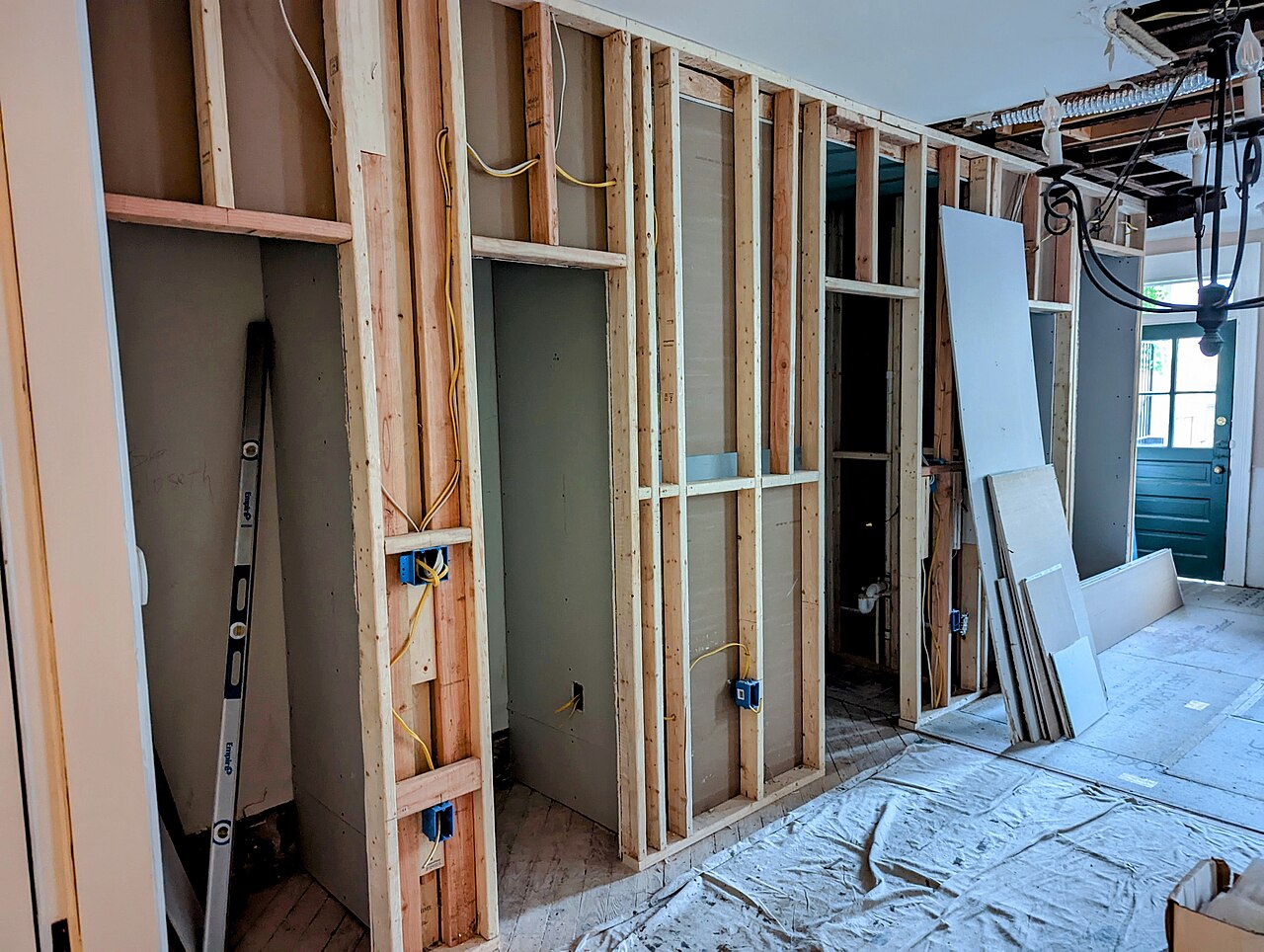
Nobody knows what is behind the plaster until it comes off. Old wiring with brittle insulation, a vent pipe right where the new window should go, a floor that drops an inch from one corner to the other, water damage from a leak that was “fixed” in 1994. Any of these can add days, and some will add an inspection as well.
It helps to look early. A small opening cut in a wall that is coming down anyway, weeks ahead, might reveal the pipe before the design is final. Lifting a floor register shows how many layers of flooring are down there. In older houses, testing for lead paint and asbestos should happen before anyone swings a hammer, because finding either halfway through brings the whole job to a halt.
A contingency fund belongs in the same conversation. Ten percent is a common figure for newer homes, and fifteen or twenty is more comfortable for old ones. Time needs a cushion too. If the plan says seven weeks, tell the relatives nine.
Trades have to arrive in order
A kitchen passes through many hands: demolition, framing, plumbing, electrical, inspection, drywall, paint, cabinets, counters, backsplash, final connections. Each crew needs the one before it to be finished, and each crew has other customers. When the electrician is delayed by two days, the drywall team may have moved to a different house and cannot return until the following week. Two days turn into seven.
Permits and inspections fit between these steps, and an office that is busy in summer will not hurry. Apply early. Find out which stages need a visit and how much notice the inspector wants.
Rubbish is another quiet source of delay. A full dumpster with no pickup booked leaves old cabinets stacked in the driveway and crews stepping around them. Commercial kitchens treat waste removal planning as a task in its own right, and the same thinking works at home: decide where the container goes, who may use it and when it will be emptied.
Decisions made late cost the most
Plenty of delays begin at the kitchen table. The faucet has not been chosen, so the counter cannot be drilled. The backsplash is down to three samples that have been leaning on a windowsill since Easter. Outlets were placed before anyone thought about the coffee machine.
Make a list of every choice, down to the cabinet pulls, with a date beside it. Work backwards from when each trade will need the answer. Changing one’s mind is allowed, naturally, but it is cheap on paper and expensive on site. Moving a sink by a foot after the plumbing is done could mean opening the floor again.
It also pays to set up a decent temporary kitchen. A folding table, a microwave, a kettle, one good knife and a plastic tub for dishes will do. When a household can cope for an extra fortnight without misery, there is less pressure to accept sloppy work just to have it over with. Late and right is irritating for a month. Rushed and wrong stays on the wall for fifteen years.